How to Pack Dishes and Glassware for Moving and Storage
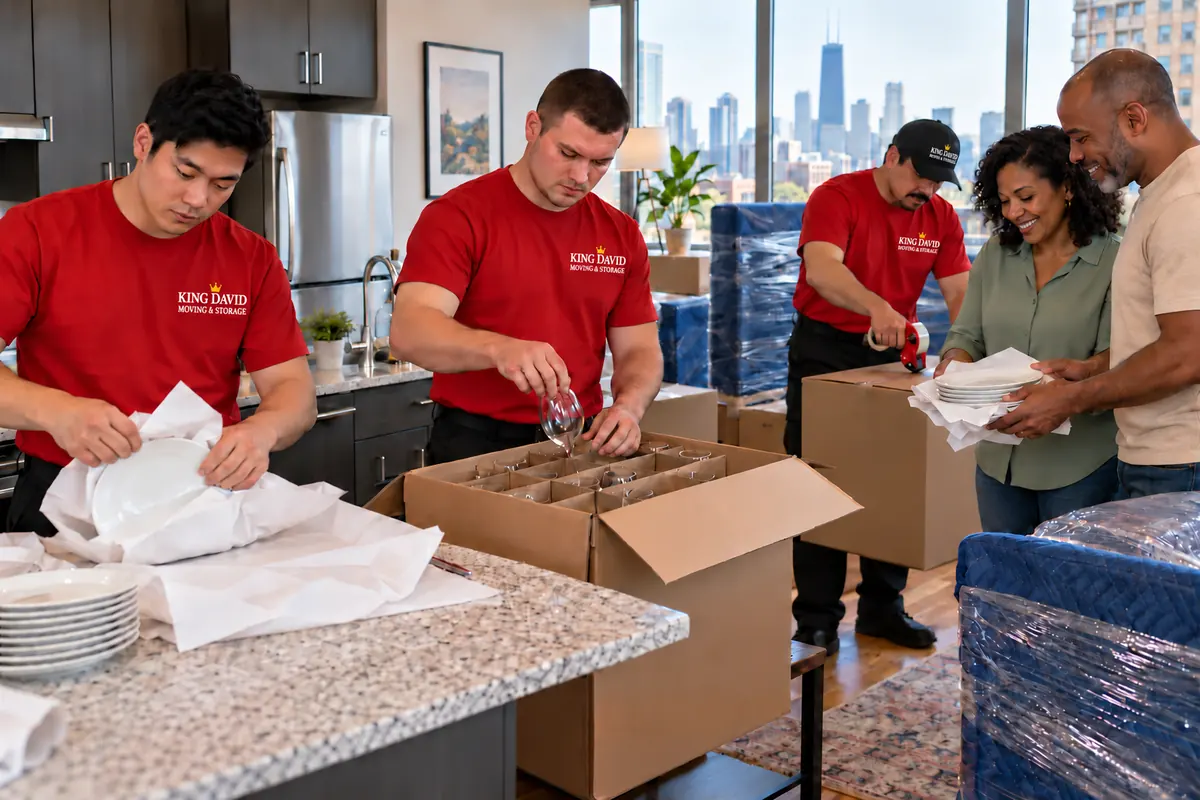
To pack dishes and glassware for moving, use sturdy cartons, wrap each piece individually, and fill empty spaces so items don’t knock together. If the boxes will also sit in storage, clean and dry everything first, then label the cartons with the day you will need them again.
A kitchen often takes longer to pack than its size suggests. One cupboard can hold dozens of pieces with different shapes and weak points. Working through it in small groups is easier than trying to finish every cabinet the night before your Chicago move.
Set up a packing station before opening cupboards
Choose a clear table with enough room for paper, a carton and the pieces you are wrapping. Gather clean packing paper, strong tape, a marker and suitable dish cartons. Use dividers designed for glassware where appropriate, and follow the carton system’s instructions.
Avoid damaged or damp boxes. A carton that closes easily can still be too heavy to handle safely. Spread dense items across several manageable boxes rather than filling one large carton with everything from a shelf.
King David’s moving guides and tips cover packing materials and household preparation. If you are unsure about valuable or unusually delicate items, ask for an assessment before buying generic supplies.
How to pack dishes and glassware for moving
Plates and everyday dishes
Cushion the bottom of the carton with crumpled packing paper. Wrap plates individually, protecting the edges as well as the faces. Arrange wrapped plates vertically on their edges in a suitable dish carton, with cushioning between groups and around the sides.
Do not leave a loose stack of bare plates at the bottom of a box. Avoid forcing a final plate into a space that is too small. Finish with cushioning above the contents so the carton closes without pressing directly onto the dishes.
Bowls and serving pieces
Wrap each bowl separately and cushion any nested grouping so surfaces cannot rub or strike each other. Larger serving bowls may need their own carton or a separate protected section. Pack lids individually and label them with the dish they belong to.
Oddly shaped handles and decorative edges need additional space. A tight fit is not automatically a protective fit: the item should be supported without pressure on its weakest parts.
Glasses, mugs and stemware
Wrap each glass individually and use correctly sized cells or dividers with cushioning as directed by the packaging manufacturer. Protect mug handles and keep them from pressing against neighboring pieces. Do not nest bare drinking glasses together.
For stemware, cushion the bowl, stem, and base without pulling paper tightly around the stem. Keep each piece separated in suitable protective packaging. Expensive crystal or unusually thin glass may warrant professional packing or a purpose-made insert.
Check the carton before sealing it
Fill gaps gently with packing paper. Contents should not shift during normal handling, but do not shake a box to test it. If you hear pieces touching while positioning the carton, reopen it and improve the separation.
Seal the bottom and top securely. Label the top and at least one side with the destination room, a brief contents description, and any handling instructions. A fragile label is useful communication, but it cannot compensate for inadequate packing.
Set aside a small first-night kitchen box with a few plates, mugs and utensils. You will not need to unpack every storage carton simply to make breakfast.
What changes when dishes are going into storage?
Dry dishes and glassware fully before wrapping them. Remove food residue and keep pantry items separate according to the facility’s rules. Use clean, dry packing materials rather than sealing damp towels around kitchenware.
Number the boxes and keep a matching list. A label such as “Kitchen 04 — everyday mugs — HOME” is more useful than “Fragile” alone. If the box is going into storage, mark that destination prominently and record whether you may need access before final delivery.
Ask about stacking and access arrangements when discussing storage services. Do not place heavy furniture or dense cartons on top of fragile kitchen boxes. In managed storage, tell the provider about retrieval needs rather than assuming you can walk in and remove a carton yourself.
Decide what you will pack and what the crew will pack
You can handle everyday dishes while requesting help with a china collection or delicate stemware. Make that division clear in the estimate. Show the contents of cabinets rather than describing the job only as “one kitchen.”
With professional packing services, confirm the supplies, labor, and items included. Packing and transportation are separate tasks, and a full kitchen can add substantial preparation time. Ask how customer-packed cartons are handled under the company’s applicable coverage terms.
Common packing questions
Can I use clothing instead of packing paper?
Fabric can provide cushioning, but it is harder to make consistent protection around rims, stems, and handles. Clean packing paper and suitable dividers offer a more predictable packing system. Avoid relying on a single towel around several unwrapped pieces.
Should I pack the whole kitchen at once?
Start with rarely used serving pieces, then work toward everyday dishes. Keep the small essentials box accessible. This lets you continue using the kitchen while most cartons are finished.
Are dish boxes enough by themselves?
No. The carton, individual wrapping, separation, and cushioning work together. A strong box still needs properly protected contents.
Arrange help with kitchen packing
If you need help to pack dishes and glassware for moving, tell King David Moving & Storage which cabinets need attention and whether the cartons are going home or into storage. Call 847-470-0055 or request a free moving estimate for your Chicago-area move.
