Moving Into a Chicago Walk-Up: Stairs, Costs and Preparation
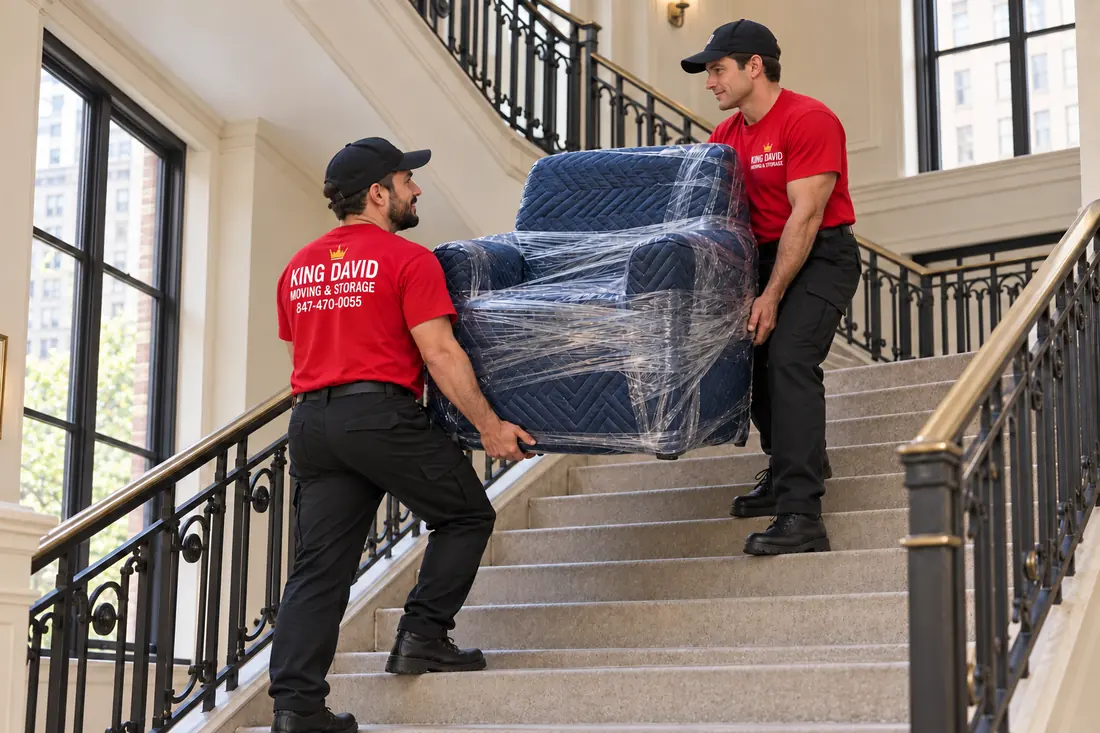
Moving into a Chicago walk-up means planning the route your furniture will travel, not just the rooms it will fill. Stairs, narrow landings and the distance from the truck can affect both the schedule and the estimate. Before booking, share the full inventory, stair details and packing needs so your mover can plan the crew and equipment around the actual building.
A sunny third-floor apartment may be exactly what you wanted. Getting a sofa around its second-floor landing is a separate question. Here is how to prepare before moving day, understand the cost factors and avoid discovering an access problem with a truck already outside.
What to check before moving into a Chicago walk-up
A walk-up apartment relies on stairs for access rather than a usable elevator. The floor number alone does not describe the job. A raised first floor can include exterior steps, while an upper apartment may have split flights and several tight turns.
Walk the complete route at both addresses. Start where the truck can legally stop, continue through the entrance and finish inside the apartment. Record exterior steps, interior flights, shared hallways and any gates. Ask the property manager which entrance movers may use; the rear stairway is not automatically the approved route.
When contacting our Chicago apartment movers, include a short video of the route and photographs of difficult turns. These details are more useful than simply writing “third floor” on an estimate request.
How stairs affect Chicago walk-up moving costs
No single reliable price fits every walk-up move. The inventory, access, crew, packing work and moving distance all matter. Stairs add repeated carrying trips and may require more time to position and protect large pieces.
For an hourly estimate, compare the quoted crew rate, expected billable hours and separately listed charges. Ask when the clock starts and stops, whether travel is included, and how stairs are treated. A lower hourly rate alone does not tell you the final cost.
| Cost factor | Why it matters | What to share |
|---|---|---|
| Stair flights and turns | Repeated carries and restricted turning space | Steps, flights and photos at both addresses |
| Truck-to-door distance | A longer walk adds work to each trip | Likely legal parking and entrance location |
| Large or heavy furniture | May need extra handling or disassembly | Dimensions, photos and item descriptions |
| Packing and materials | Preparing belongings adds labor and supplies | Full packing, partial packing or ready boxes |
| Building restrictions | Limited hours or access can affect scheduling | Written rules and contact information |
Stair charges and oversized or heavy furniture
Moving furniture to a second-, third- or fourth-floor walk-up can increase the cost. Depending on the moving company’s applicable tariff and pricing terms, stairs may involve a separate charge, additional hourly labor, or both. Each company calculates these charges differently, so ask how they apply at both addresses.
Oversized or unusually heavy items, such as a large couch, safe or piano, may also require additional movers, specialized equipment and extra handling. Narrow stairways, tight turns and multiple flights can make the work more demanding.
For illustration, an additional charge might be $100, $200 or $300; some jobs may cost more. These are examples, not King David Moving & Storage rates or a guaranteed price range. The actual charge depends on the company’s applicable tariff, the item’s size and weight, the number of flights and the access conditions.
Before booking, send photographs, item dimensions and stair details. Then request a written estimate showing any stair or specialty-item charges and whether they apply per item, per flight or to the entire job.
For broader budgeting, use our Chicago moving-cost guide, then request an estimate based on your own addresses.
The Illinois Commerce Commission household-goods resources include a consumer guide and licensed-mover search. Review the written estimate and ask the mover to explain its pricing and coverage before booking.
Full packing and moving need additional time
A moving-only plan assumes the agreed packing is already complete. If the crew must pack the kitchen, books, clothing and fragile items first, the job needs more time. The amount depends on the inventory, materials and preparation required. For a larger move, ask whether packing should happen on a separate day.
Measure the furniture and the stair route
A sofa can fit through the apartment door and still fail to turn on the landing. Measure the whole route before deciding which pieces to bring.
Record the narrowest points
- Door openings with doors in their normal open position.
- Usable stair width between walls, railings and other obstructions.
- Landing width and depth, especially where the route changes direction.
- Low ceilings, overhead fixtures and doorway height.
- Furniture width, depth and height, including fixed legs or arms.
Send these measurements to the mover along with photos. Measurements help identify concerns, but they do not guarantee that a rigid item can make a turn. Ask about a video or on-site review for an oversized sofa, tall cabinet or heavy dresser.
Plan furniture disassembly and any approved access changes
When measuring tight turns, check whether furniture parts or a removable door are limiting access. Discuss these obstacles before moving day so the estimate accounts for the work required.
Some bed frames, tables and sectional sofas can be taken apart to make carrying them upstairs easier. Confirm which pieces the crew can disassemble and reassemble, and keep labeled hardware together. This work takes additional time and may increase the cost.
In some cases, a door or stair railing may need temporary removal to create enough room. Do not assume this is included or that the moving crew can perform it. Obtain the property owner’s or building manager’s approval first, and arrange a qualified professional when needed. Removal, safe access arrangements and proper reinstallation add time and may involve separate charges. If removal is not approved or safe, agree on another plan.
Choose a crew for the stairs and inventory
A lightly furnished studio and a full two-bedroom apartment need different plans. The right crew also depends on weight, stair geometry and the distance between the truck and the entrance.
Our guide to two movers and a truck in Chicago explains when a smaller crew may fit. For a walk-up, let the mover assess access before choosing crew size. Extra people do not create extra space on a narrow landing, so the handling plan matters as much as headcount.
Prepare boxes and protect furniture
Use manageable boxes for books and other dense belongings. Close and tape each box, label its destination room and point out fragile contents. Loose bags and open containers make repeated stair trips harder to organize.
Discuss moving blankets, stretch wrap, mattress protection and any special requirements before the crew arrives. Stretch wrap can secure blankets, but it does not replace cushioning. Tell the mover about delicate finishes, glass and loose furniture components.
If you need help getting ready, include professional packing services in the estimate. Confirm which labor and supplies are included rather than adding a whole apartment of packing on moving morning.
Coordinate parking and building access
Ask management about moving hours, keys, approved entrances, required protection and any insurance documentation. Even a smaller building can have its own rules. Keep a contact number available in case a locked gate or entrance needs attention.
Use our Chicago moving permit and truck parking guide to start planning curb access. Confirm the arrangement for your exact address. A convenient spot outside the door is not necessarily a legal place for a moving truck.
Your final walk-up moving checklist
- Confirm the inventory, addresses, flights of stairs and packing scope.
- Share furniture dimensions and photos of tight turns.
- Finish agreed self-packing and label the boxes.
- Confirm building access and the truck parking plan.
- Clear the approved route without blocking shared exits.
- Keep children and pets away from the working route.
- Carry keys, medication, documents and daily essentials separately.
- Show the crew where large pieces belong before placement begins.
Chicago walk-up moving questions
Do second-, third- and fourth-floor moves cost extra?
They can. The actual stair flights, inventory and access at both addresses determine the work. Depending on the mover’s applicable tariff, the estimate may include stair charges, extra labor or specialty-item fees. Also ask about time and charges for furniture disassembly or approved door and railing removal and reinstallation.
Can movers take a sofa up a narrow staircase?
It depends on the sofa and the route. Share measurements and photos early. If it cannot pass safely, discuss another item or an approved specialist solution before moving day.
How long should I allow for a walk-up move?
Ask for a planning range based on the inventory, stairs, travel and services. Include packing, disassembly and placement at delivery. Avoid booking another appointment immediately after the estimated finish.
Can I reduce the cost by packing myself?
Completing agreed packing beforehand can reduce packing labor. Use suitable materials and ask how customer-packed items affect handling and coverage. Leave specialty preparation to the appropriate professionals.
Get a moving plan for your Chicago walk-up
Send King David Moving & Storage your moving into a Chicago walk-up date, both addresses, inventory, stair photos, and packing needs. We can review the details with you and prepare an estimate around the work involved.
Call (847) 470-0055 or request a free moving estimate online. A clear access plan gives everyone a better starting point before the first box reaches the stairs.
